Memory:
the persistence of learning over time through the storage and retrieval of information.
Memory Process:
- Encoding
- Storage
- Retrieval
Encoding: the processing of information into the memory system.
Storage: the retention of encoded material over time.
Retrieval: the process of getting the information out of memory storage.
Recall Vs. Recognition:
- with recall- you must retrieve the information from your memory
- with recognition- you must identify the target from possible targets
Flashbulb Memory: a clear moment of an emotionally significant moment or event.
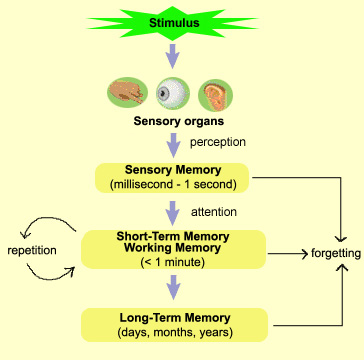
Types of Memory:
- Sensory: immediate, initial recording of sensory information stored just for an instant, must get unprocessed.
- Short-term: memory that holds only a few items (7 digits), the information will be stored into long-term or forgotten.
- Long-term: relatively permanent and limitless storehouse of the memory syste


Encoding
Automatic Processing:
-unconscious encoding of incidental information
-you encode space, time, and word meaning
-things become automatic with practice
Effortful Processing:
-encoding that requires attention and conscious effort
-rehearsal is the most common effortful processing technique
-through enough rehearsal, what was effortful becomes automatic
the next-in-line effect: we seldom remember what the person has just said or done if we are next.
Spacing Effect:
-we encode better when we study or practice over time.
Serial Positioning Effect: Our tendency to recall best the last and first items in a list.
Types of Encoding:
- Semantic Encoding: the encoding of meaning, like the meaning of words.
- Acoustic Encoding: the encoding of sound, especially the sounds of words.
- Visual Encoding: the encoding of picture images.
Mnemonic Devices: use imagery, like my "peg word"
Chunking:
-organizing items into familiar, manageable units
-often it will occur automatically
Types of Retrieval Failure:
- Proactive Interference: the disruptive effect of prior learning on the recall of new information
- Retroactive Interference: the disruptive effect of new learning on the recall of old information
Misinformation Effect: incorporating misleading information into one's memory of an event.